
Qureos Hiring Pulse
The monthly briefing for recruiters and TA leaders who are tired of generic advice. Data, tactics, and takes you can use this week.


01. 🔥This month’s hiring trend
Everyone is hiring AI engineers. Almost no one knows how.
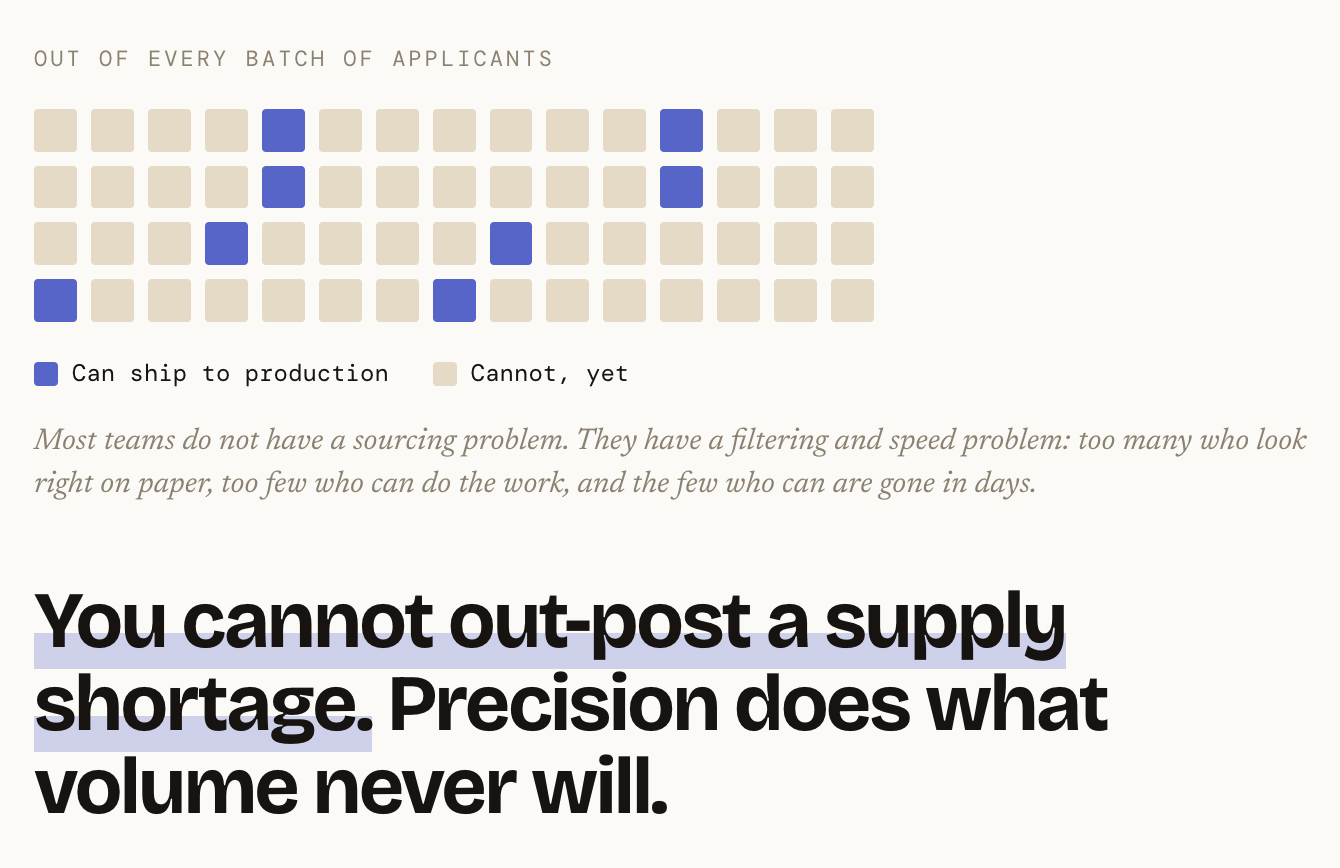
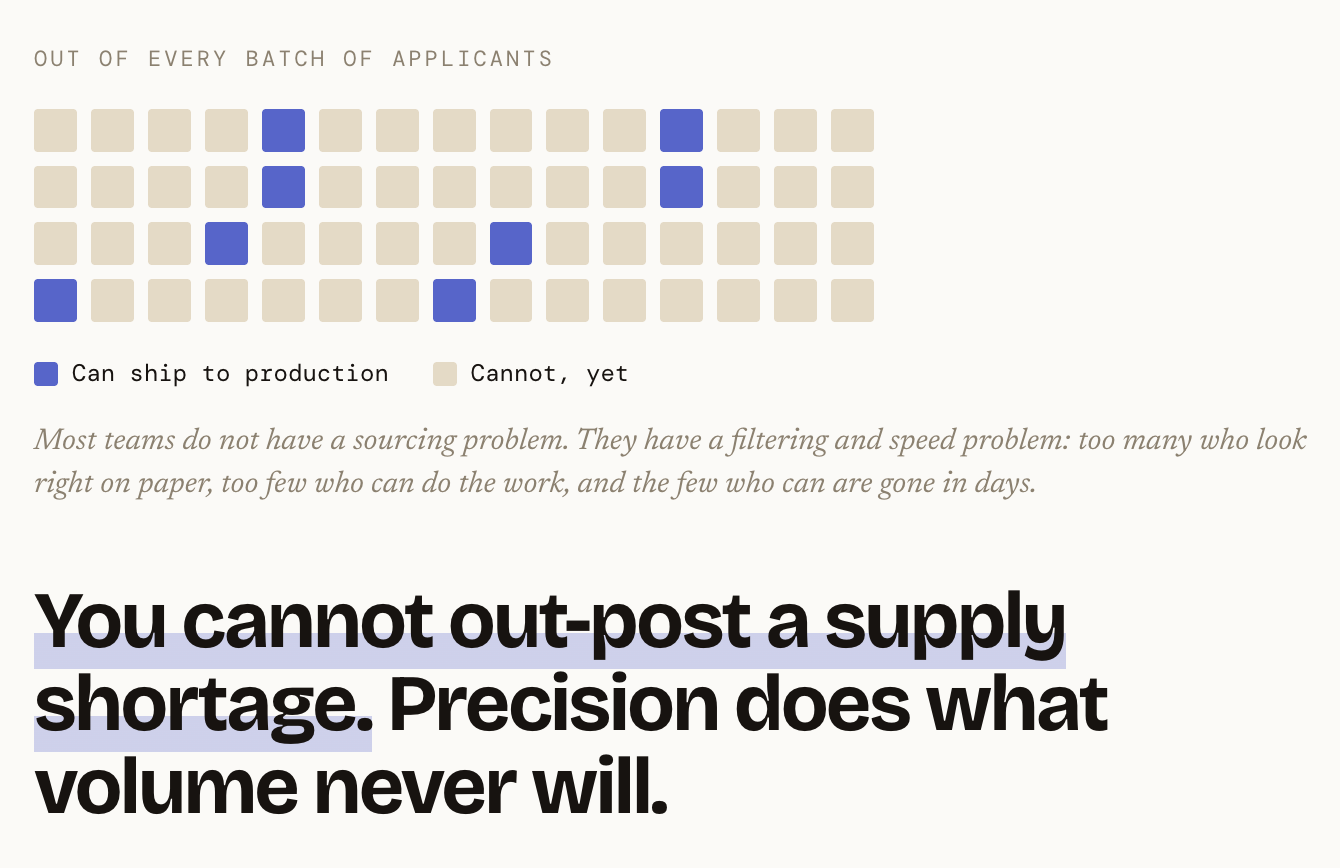
Open a req for an AI or ML engineer today and you will feel it fast. The good ones do not apply. The ones who apply cannot always ship. And the market you are competing in is not local anymore, it is global, because a strong AI engineer in Dubai, Riyadh, or Bangalore is being pitched by companies in San Francisco paying San Francisco money.
This is the hardest hiring problem most teams will face this year. So this issue is entirely about it: where these people actually are, why the hires that do happen keep failing, and how to interview for a skill set that barely existed three years ago. Let’s get into it.
The scarcity is real, and it is not going away
Three forces hit at once:
Demand exploded. Every company now has a mandate to build something with AI, so every company suddenly needs the same narrow profile: someone who can take a model into production, not just talk about it.
Supply did not keep up. The number of engineers who have actually shipped AI systems under real load is small. Most “AI engineers” on the market have done courses and side projects, not production work.
The competition went global. Remote work erased the geographic moat. Your local offer competes with fully remote roles paying in dollars. For GCC teams this is sharper still: you are hiring against global rates for a globally scarce skill.
02. 💬 What recruiters are talking about
The same three complaints, in every thread
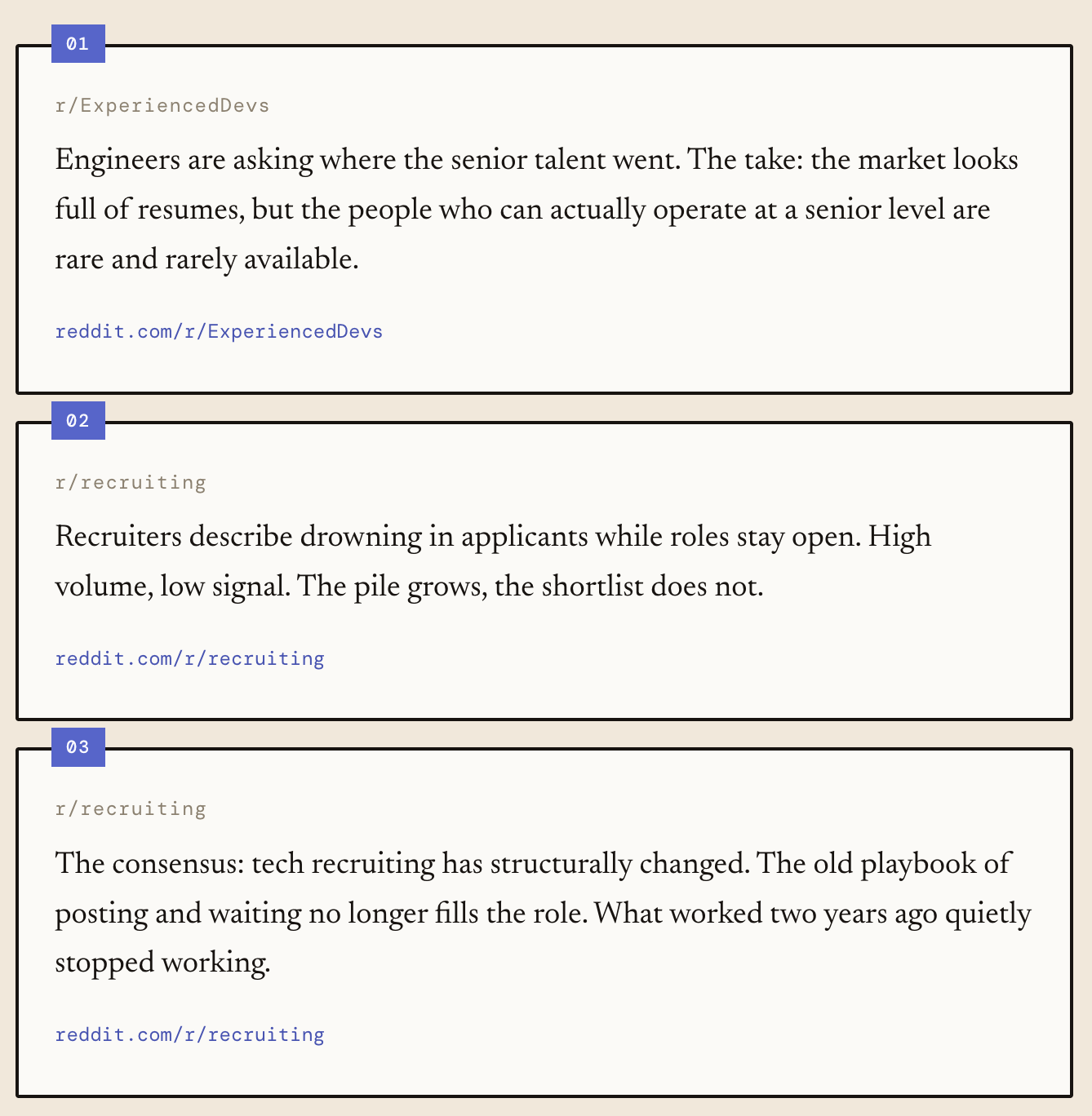
We read the threads where recruiters and engineers talk honestly, not the vendor webinars. Across these conversations, the same patterns keep surfacing.
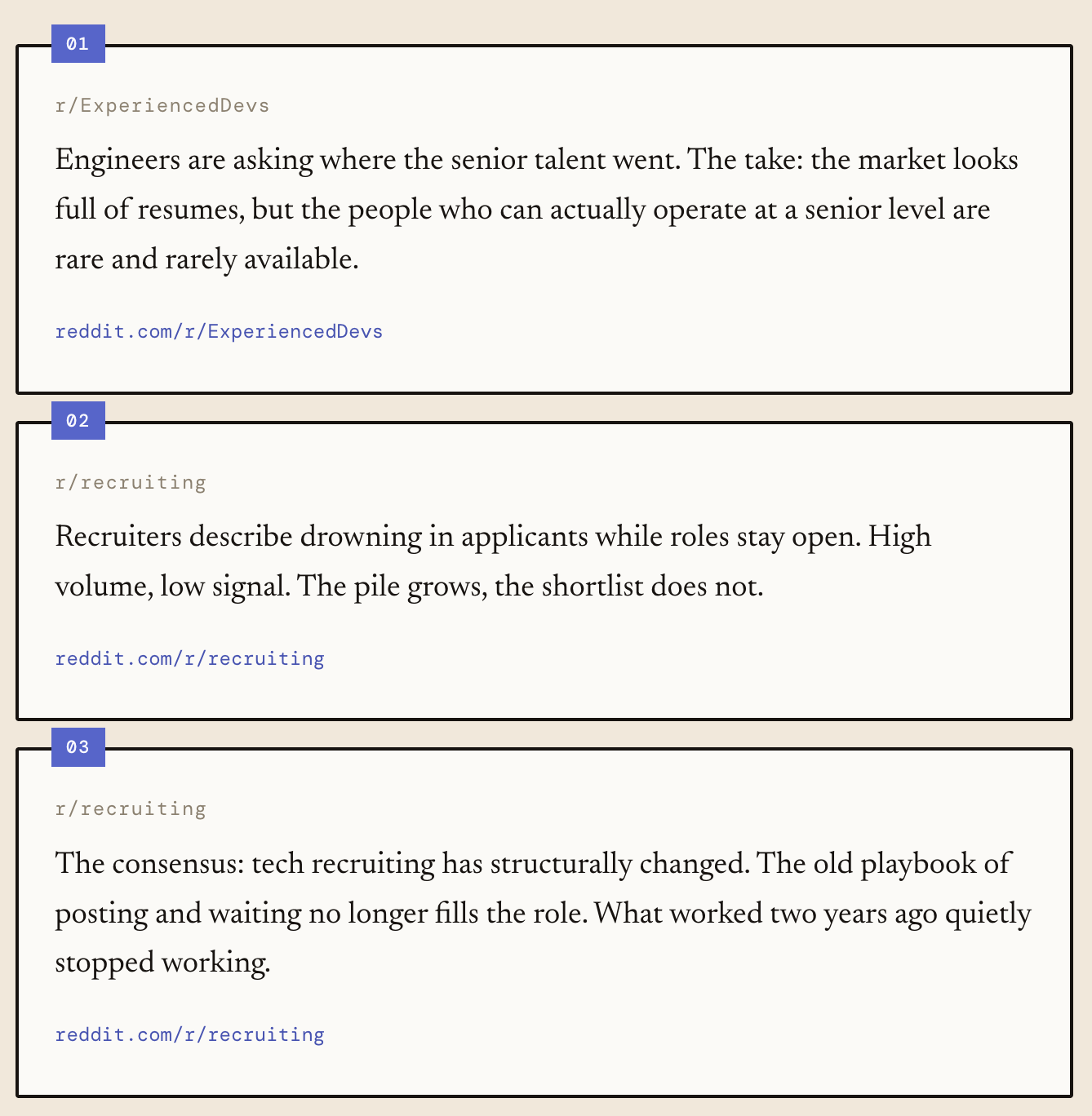
The through-line across all three: this is not a volume problem. It is a filtering and speed problem, and the teams still running the old playbook are the ones stuck with open reqs.
03. ✨ Case study: Hired 7 Sales Professionals in Less than 2 Months
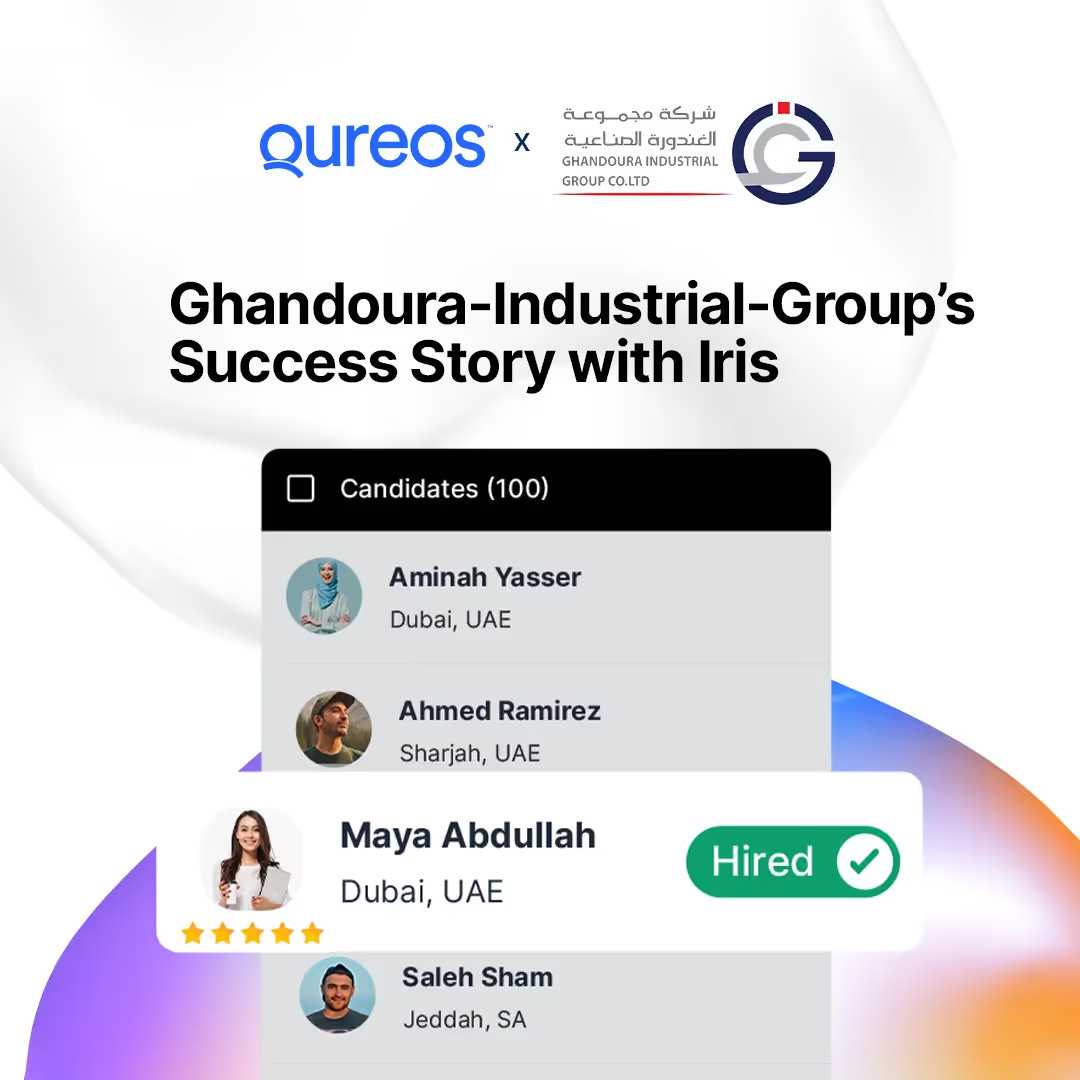
A useful contrast to the complaints above. Ghandoura Industrial Group, a Saudi plastics and paper manufacturer, was stuck in exactly the trap those threads describe. To hire sales staff, their team flew to India and Egypt to meet candidates in person, and manual screening dragged decisions out for months while quality still slipped.
They moved screening and outreach to Iris, the Qureos AI recruiter, which automated the evaluation and the personalized outreach and removed the need to travel at all.
7 sales professionals hired in under two months. 90% less time spent on manual screening. A 100% hiring success rate.
These were sales roles, not AI engineering, but the lesson is the same one running through this issue: the bottleneck is rarely the talent, it is the speed and quality of your screening. Fix that and the pipeline moves.
05. 🎯Hiring tactic of the month
Interview for shipping, not for trivia
One change you can make in your very next interview. Most technical screens for AI roles test the wrong thing: algorithm trivia and model theory. Then teams act surprised when the hire cannot get anything into production.
Test the actual job instead:
Give a real, messy problem, not a clean puzzle. Production AI work is mostly bad data and unclear requirements. See how they handle ambiguity.
Make them walk through a system they shipped, end to end. Where it broke. What they cut. What they would redo. People who have shipped answer in specifics. People who have not, generalize.
Test judgment, not recall. “When would you not use a large model here?” reveals more than any coding puzzle.
06. 📚Resource of the month
AI-role job description templates
The scarcity starts with the JD. Most AI role descriptions are copied from generic engineering templates, so they attract generic engineers. We built a set of JD templates written specifically for AI and ML roles, the kind that describe the actual work and filter for people who can do it.
Templates for AI Engineer, ML Engineer, and Applied Research roles.
Language that filters for production experience, not just theory.
Ready to paste, edit, and post.
⚡ Before you go
One honest note on speed
The single biggest reason teams lose scarce candidates is time. The best AI engineers are off the market in days, and a two-week screening process loses them by default. That is the exact problem Qureos removes: screening in minutes instead of days, so your team chases the candidates worth chasing, not the pile.